

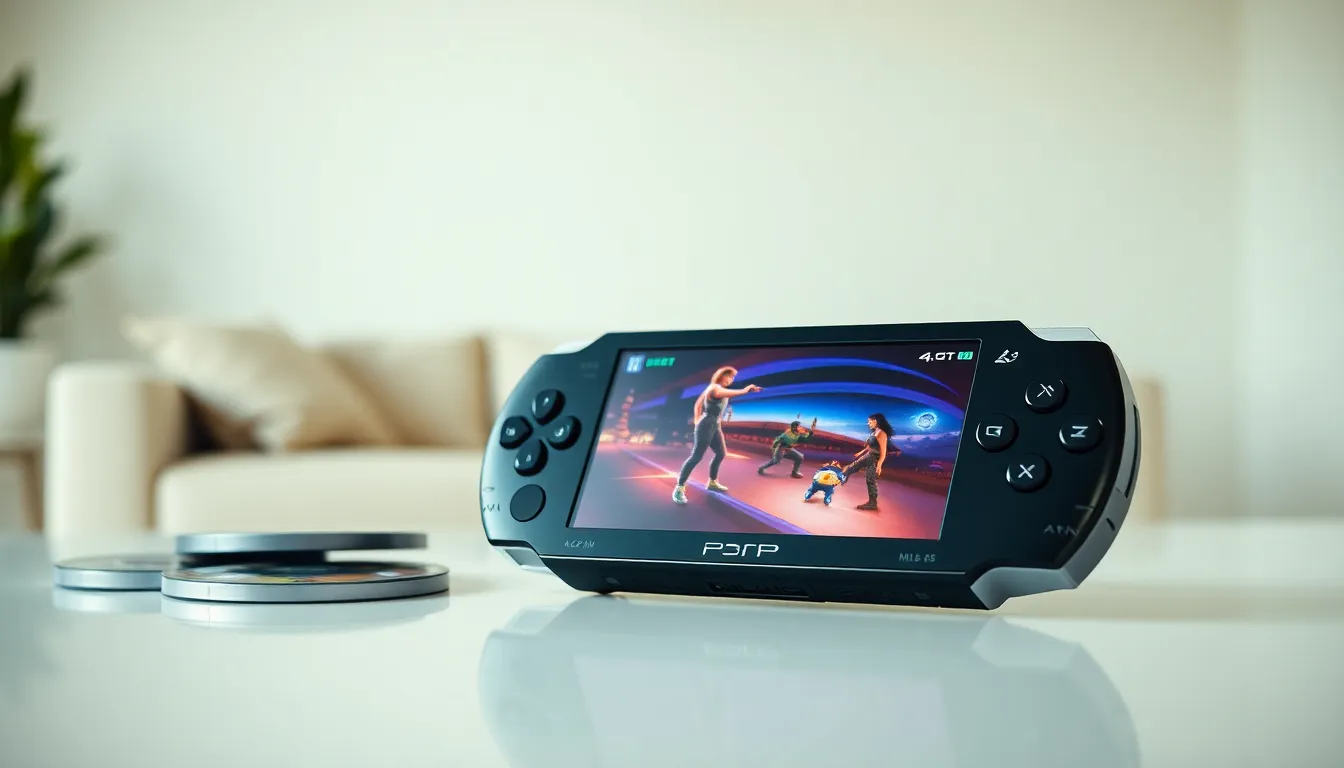
The PlayStation Portable, or PSP, changed handheld gaming when Sony launched it in 2004. This device brought console-quality graphics to a portable format for the first time. Gamers could play titles like God of War and Grand Theft Auto on the go. The PSP also played movies, music, and connected to the internet. It sold over 80 million units worldwide and competed directly with Nintendo’s dominance in the handheld market. This guide covers everything about the PlayStation Portable, from its hardware specs to its lasting impact on gaming.
Table of Contents
ToggleKey Takeaways
- The PlayStation Portable (PSP) was Sony’s groundbreaking handheld console that launched in 2004 and brought console-quality gaming to a portable device for the first time.
- Sony sold over 80 million PSP units worldwide, successfully challenging Nintendo’s dominance in the handheld gaming market.
- The PlayStation Portable featured a 4.3-inch widescreen display, 333 MHz processor, Wi-Fi connectivity, and the unique UMD disc format for games and movies.
- Beyond gaming, the PSP served as a complete entertainment system capable of playing music, movies, browsing the web, and displaying photos.
- Sony released five PSP models between 2004 and 2011, including the slimmer PSP-2000 and the digital-only PSP Go.
- The PSP’s legacy lives on through its influence on modern portable gaming devices like the Nintendo Switch and Steam Deck.
History and Release of the PSP
Sony announced the PlayStation Portable at E3 2003. The company wanted to challenge Nintendo, which had controlled the handheld market since the Game Boy launched in 1989. Ken Kutaragi, often called the “Father of PlayStation,” led the PSP’s development.
The PlayStation Portable launched in Japan on December 12, 2004. North America received it on March 24, 2005, with Europe following on September 1, 2005. The initial price was $249.99 in the United States.
Sony positioned the PSP as more than a gaming device. The company marketed it as a portable entertainment system. This strategy set the PlayStation Portable apart from Nintendo’s DS, which focused primarily on games.
The PSP sold 200,000 units on its first day in Japan. By March 2005, Japanese sales had reached 2 million units. The device proved that gamers wanted console-quality experiences in their pockets.
Key Features and Hardware Specifications
The PlayStation Portable featured impressive hardware for its time. Its 4.3-inch widescreen LCD display offered a 480 x 272 resolution. This screen made games and movies look sharp and vibrant.
Processing Power
The PSP ran on a 333 MHz MIPS R4000 processor. It included 32 MB of main RAM and 4 MB of embedded DRAM. These specs allowed the PlayStation Portable to run games that rivaled early PS2 titles.
Storage and Media
Sony created a new disc format called the Universal Media Disc (UMD). These small optical discs held up to 1.8 GB of data. The PSP also supported Memory Stick Duo cards for saving games and storing media files.
Connectivity Options
The PlayStation Portable included built-in Wi-Fi (802.11b). Players could browse the web, download content, and play multiplayer games online. The device also featured USB connectivity for transferring files from a computer.
Battery and Design
The original PSP battery lasted 4-6 hours during gameplay. The device weighed 280 grams and measured 170mm x 74mm x 23mm. Sony designed the PlayStation Portable with a sleek, black finish that appealed to adult gamers.
Popular Games and Media Capabilities
The PlayStation Portable built a library of over 800 games. Many franchises from the PS2 made successful transitions to the handheld.
Top PSP Games
God of War: Chains of Olympus and Ghost of Sparta delivered full action-adventure experiences. Grand Theft Auto: Liberty City Stories and Vice City Stories brought open-world gameplay to the PSP. Monster Hunter Freedom Unite became a cultural phenomenon in Japan, selling over 5 million copies.
Other popular titles included:
- Crisis Core: Final Fantasy VII
- Metal Gear Solid: Peace Walker
- Persona 3 Portable
- Lumines
- Patapon
Movies and Music
The PlayStation Portable played UMD movies directly. Studios released hundreds of films in the UMD format. Users could also transfer video files from their computers to watch on the device.
The PSP functioned as an MP3 player. It displayed album art and supported playlists. Many users carried their PlayStation Portable as their primary music device.
Internet and Apps
Sony added a web browser through firmware updates. The PlayStation Portable could access RSS feeds, display photos, and run location-free TV. These features made the device useful beyond gaming.
Different PSP Models and Variations
Sony released several PlayStation Portable models between 2004 and 2011. Each version brought improvements and changes.
PSP-1000 (Original)
The first model launched in 2004. It featured 32 MB of RAM and the thickest design. Collectors now prize this original PlayStation Portable for its build quality.
PSP-2000 (Slim & Lite)
Sony released this model in 2007. It was 33% lighter and 19% thinner than the original. The PSP-2000 doubled RAM to 64 MB and added video-out capability. This allowed users to play games on their televisions.
PSP-3000 (Brite)
The 2008 model improved the screen significantly. Sony added a better LCD with wider color gamut and faster response time. The PlayStation Portable 3000 also included a built-in microphone for Skype calls.
PSP Go (N1000)
This 2009 redesign removed the UMD drive entirely. The PSP Go relied on digital downloads from the PlayStation Store. It featured 16 GB of internal storage and a sliding screen design. The device weighed just 158 grams.
PSP Street (E1000)
Sony released this budget model in Europe in 2011. It removed Wi-Fi and stereo speakers to reduce costs. The PlayStation Portable Street targeted entry-level consumers.
The PSP’s Legacy and Impact on Handheld Gaming
The PlayStation Portable proved that portable devices could deliver console-quality experiences. It sold 80 million units worldwide by the time Sony discontinued it in 2014.
The PSP influenced smartphone gaming significantly. Its wide screen and multimedia focus predicted how people would eventually use their phones. Apple and Android devices adopted similar approaches to portable entertainment.
Sony continued the handheld line with the PlayStation Vita in 2012. The Vita improved on the PSP formula with dual analog sticks and touchscreens. But, it never matched the original PlayStation Portable’s commercial success.
The PSP also pioneered digital game distribution on handhelds. The PlayStation Store let users buy and download games directly to their devices. This model became standard across all gaming platforms.
Today, retro gaming communities keep the PlayStation Portable alive. The device supports homebrew applications and emulators. Many gamers consider the PSP one of the best handhelds ever made.
The PlayStation Portable’s influence extends to modern devices like the Steam Deck and Nintendo Switch. These systems follow the template Sony established: console-quality games in a portable format.

