

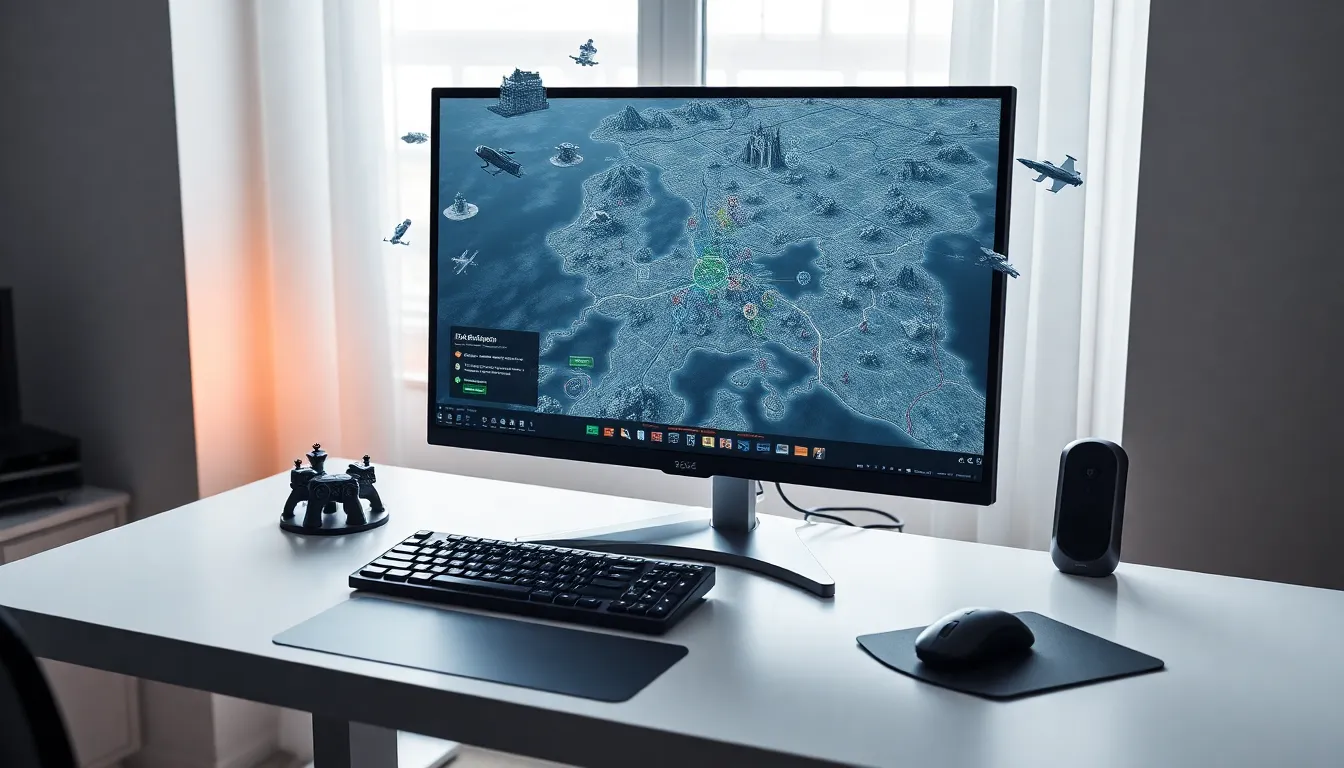
Strategy games examples span decades of gaming history, from chess-inspired classics to sprawling empire simulators. These games reward careful planning, resource management, and smart decision-making over quick reflexes. Players who enjoy outsmarting opponents and building systems from the ground up find strategy games deeply satisfying.
This guide covers the best strategy games examples across multiple eras and styles. It explores what separates good strategy games from great ones, highlights genre-defining classics, and recommends modern titles worth playing. Whether someone prefers turn-based tactics or real-time action, there’s a strategy game that fits their style.
Table of Contents
ToggleKey Takeaways
- Strategy games examples range from classic titles like Civilization and StarCraft to modern hits like Crusader Kings III and XCOM 2.
- Great strategy games balance complexity with accessibility, offering meaningful choices and clear feedback systems.
- Turn-based strategy games reward careful planning, while real-time strategy games test quick thinking and multitasking skills.
- Iconic strategy games examples like Age of Empires II remain popular over 25 years after release due to strong design and active communities.
- Hybrid games like Total War combine turn-based and real-time elements, appealing to fans of both styles.
What Makes a Great Strategy Game
A great strategy game balances complexity with accessibility. Players need enough depth to feel challenged, but the rules should be clear enough to learn without frustration. The best strategy games examples share several key qualities.
Meaningful Choices
Every decision should matter. Whether placing a unit, allocating resources, or choosing a tech path, players should feel the weight of their choices. Games that offer multiple viable strategies tend to have longer replay value.
Clear Feedback Systems
Players need to understand why they won or lost. Great strategy games provide readable information about unit strengths, terrain advantages, and enemy positions. Hidden information can add tension, but core mechanics should remain transparent.
Scalable Difficulty
Strategy games examples that stand the test of time offer difficulty settings for newcomers and veterans alike. AI opponents should provide genuine challenge without cheating, and multiplayer options add infinite replayability.
Satisfying Progression
Whether through tech trees, army building, or territory expansion, strategy games need a sense of growth. Players want to see their decisions compound into powerful advantages over time.
Classic Strategy Games That Defined the Genre
Several strategy games examples from past decades established conventions still used today. These titles shaped player expectations and inspired countless successors.
Civilization Series
Sid Meier’s Civilization launched in 1991 and created the 4X genre (explore, expand, exploit, exterminate). Players guide a civilization from ancient times to the space age, making decisions about science, culture, diplomacy, and warfare. Civilization II and IV remain fan favorites, though each entry offers distinct experiences.
StarCraft
Blizzard’s 1998 release StarCraft became the gold standard for competitive real-time strategy. Three asymmetric factions, Terran, Zerg, and Protoss, created endless strategic possibilities. StarCraft’s balance and skill ceiling made it a professional esport, especially in South Korea.
Command & Conquer
Westwood Studios’ Command & Conquer series popularized base-building and resource harvesting in real-time strategy. The original 1995 game and its sequel Red Alert introduced millions to the genre. These strategy games examples emphasized fast-paced action and memorable unit designs.
Age of Empires II
Released in 1999, Age of Empires II combined historical settings with accessible gameplay. Players choose from dozens of civilizations, each with unique bonuses and units. The game still has an active competitive scene more than 25 years after launch.
Modern Strategy Games Worth Playing
Recent years have produced excellent strategy games examples that build on classic foundations while adding fresh ideas.
Crusader Kings III
Paradox Interactive’s 2020 release focuses on medieval dynasty management. Players control noble families across generations, arranging marriages, plotting assassinations, and managing feudal politics. The game generates memorable stories through its character-driven systems.
XCOM 2
Firaxis Games created one of the best turn-based tactics games with XCOM 2 in 2016. Players command a resistance force against alien occupation, managing both squad-level combat and global strategy. Permadeath for soldiers raises the stakes of every mission.
Total War: Warhammer III
This 2022 release combines turn-based empire management with real-time battles featuring thousands of units. The Warhammer fantasy setting allows for dragons, demons, and magic alongside traditional military strategy. It’s one of the most ambitious strategy games examples in recent memory.
Into the Breach
Subset Games delivered a tight tactical puzzle game in 2018. Players control mechs defending cities from giant insects across an eight-hour campaign. Perfect information and small maps create intense decision-making in every turn.
Stellaris
For players who want grand strategy on a galactic scale, Stellaris offers deep empire building and space exploration. Released in 2016 and continuously updated, it provides hundreds of hours of content.
Turn-Based vs. Real-Time Strategy Games
Strategy games examples fall into two main categories, each offering distinct experiences.
Turn-Based Strategy
Turn-based games pause action while players make decisions. This format rewards careful analysis and long-term planning. Players can take their time considering options without time pressure. Civilization, XCOM, and Fire Emblem represent this style.
Turn-based strategy games suit players who prefer chess-like deliberation. They work well for complex systems where simultaneous inputs would create chaos. Many turn-based games also work better on mobile devices and for asynchronous multiplayer.
Real-Time Strategy
Real-time strategy (RTS) games demand quick thinking and multitasking. Players must manage resources, build units, and issue commands while opponents do the same. StarCraft, Age of Empires, and Company of Heroes define this category.
RTS games test mechanical skill alongside strategic thinking. High-level play requires efficient hotkey usage and attention management. The genre creates exciting spectator experiences, which explains its esports popularity.
Hybrid Approaches
Some strategy games examples blend both styles. Total War uses turn-based campaign maps with real-time battles. Paradox grand strategy games run in real-time but allow pausing to issue orders. These hybrids appeal to players who want elements of both formats.

