

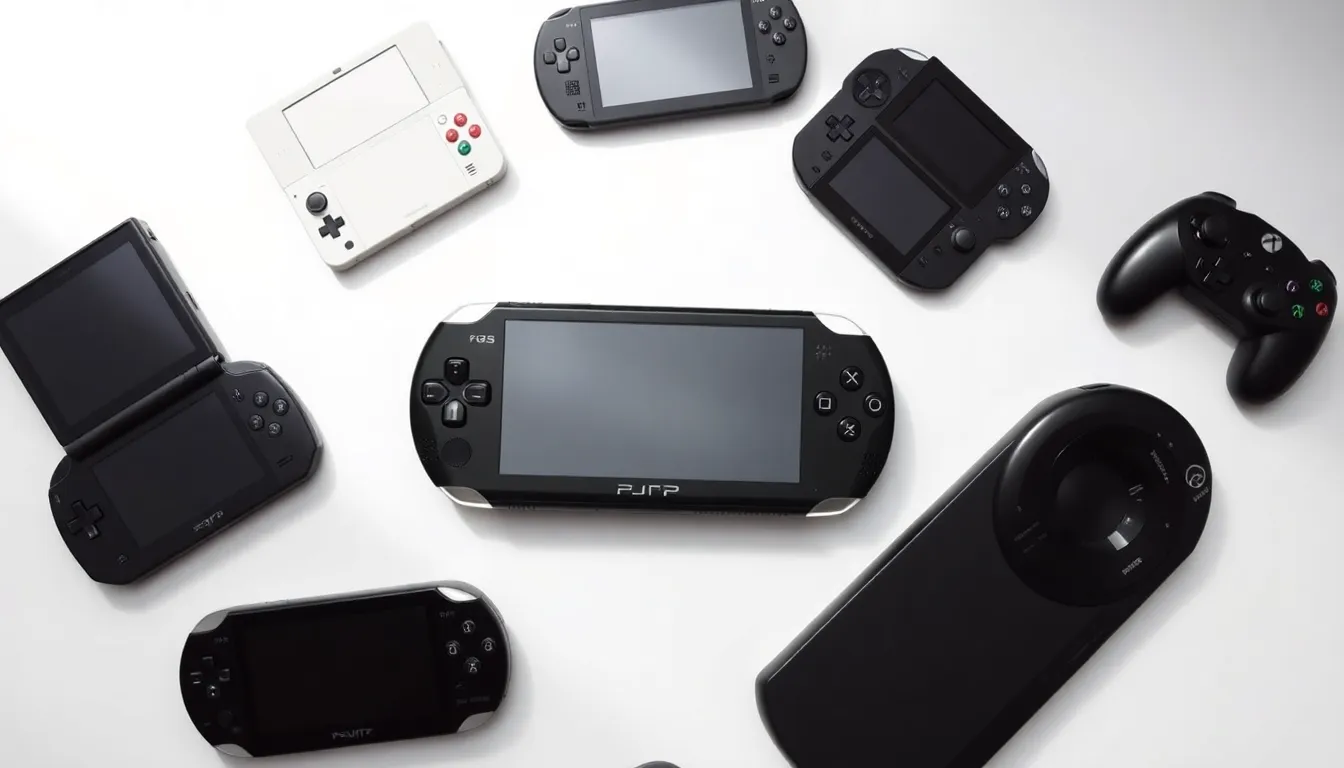
The PlayStation Portable vs. debate has sparked discussions among gamers since Sony’s handheld first hit shelves in 2004. The PSP arrived with bold promises: console-quality graphics in your pocket. It delivered on many of those promises, selling over 80 million units worldwide. But how does the PlayStation Portable stack up against its competitors, past and present? This comparison breaks down how the PSP measures against the Nintendo DS, its successor the PS Vita, and modern handhelds like the Nintendo Switch and Steam Deck. Whether someone is hunting for a retro gaming device or simply curious about handheld gaming history, this guide covers everything they need to know.
Table of Contents
ToggleKey Takeaways
- The PlayStation Portable vs. Nintendo DS rivalry defined mid-2000s handheld gaming, with the DS outselling the PSP 154 million to 80 million units.
- Sony’s PSP delivered console-quality graphics in a portable device, excelling at action games, RPGs, and multimedia features like movies and music.
- The PS Vita improved on the PSP with a better screen and dual analog sticks, but sold only 15 million units due to smartphone competition.
- Modern handhelds like the Nintendo Switch and Steam Deck vastly outperform the PSP, but Sony’s classic remains a budget-friendly option at $50-100 used.
- The PSP’s hackability keeps it relevant today, allowing users to run emulators and play retro games from NES, SNES, and other classic systems.
- Key PSP weaknesses included its single analog nub, 4-6 hour battery life, and slow-loading UMD discs.
PSP vs. Nintendo DS: The Classic Rivalry
The PlayStation Portable vs. Nintendo DS battle defined handheld gaming in the mid-2000s. These two devices took wildly different approaches to portable entertainment.
Sony built the PSP around raw power. It featured a stunning 4.3-inch widescreen display, massive for its time. The screen resolution of 480×272 pixels produced sharp visuals that made portable games look closer to home console experiences. Games like God of War: Chains of Olympus and Crisis Core: Final Fantasy VII showed what the hardware could do.
Nintendo chose a different path with the DS. Its dual-screen design and touchscreen input prioritized innovation over graphics. The lower screen’s touch functionality opened doors for unique gameplay mechanics. Games like Brain Age, Nintendogs, and The World Ends with You used these features in creative ways that the PSP simply couldn’t replicate.
The numbers tell an interesting story. The Nintendo DS sold approximately 154 million units, nearly doubling the PSP’s 80 million. But sales figures don’t capture the full picture. The PSP attracted an older demographic who valued multimedia features. It played movies on UMD discs, stored music, and even browsed the web.
Game libraries differed significantly between the two. The PSP excelled at action games, RPGs, and racing titles. Monster Hunter Freedom Unite became a cultural phenomenon in Japan. The DS dominated in casual games, puzzle titles, and Nintendo’s first-party franchises like Mario Kart DS and Pokémon Diamond and Pearl.
Battery life favored the DS. Players got around 10-19 hours depending on brightness settings. The PSP averaged 4-6 hours, a noticeable gap for portable gaming sessions. This difference mattered for long trips or gaming without access to charging.
PSP vs. PS Vita: Sony’s Handheld Evolution
Comparing PlayStation Portable vs. PS Vita reveals Sony’s attempt to improve on their original formula. The Vita launched in 2011 with significant hardware upgrades.
The PS Vita’s 5-inch OLED screen crushed the PSP’s display in visual quality. Colors popped with more vibrancy, and blacks appeared deeper. Resolution jumped to 960×544 pixels, quadruple the PSP’s pixel count. Games like Uncharted: Golden Abyss and Gravity Rush demonstrated these visual improvements clearly.
Control options expanded dramatically. The Vita added a second analog stick, rear touchpad, front touchscreen, motion sensors, and cameras. These additions gave developers more creative freedom. The PSP’s single analog nub had limited many game genres, particularly first-person shooters.
But, the Vita faced challenges the PSP never encountered. Smartphones had grown into serious gaming platforms by 2011. Mobile games offered free or cheap entertainment that cut into the dedicated handheld market. The Vita sold only 15 million units, a steep decline from the PSP’s 80 million.
Sony’s proprietary memory cards for the Vita drew heavy criticism. These cards cost significantly more than standard SD cards, adding hidden expenses to ownership. The PSP used Memory Stick Pro Duo cards, which were also proprietary but more affordable.
Backward compatibility existed through digital downloads. Vita owners could purchase and play many PSP games from the PlayStation Store. Physical UMD discs from the PSP library didn’t work in the Vita, which frustrated collectors.
The PSP maintains a stronger homebrew community today. Its hackable nature allows users to run emulators, custom firmware, and unsigned software. The Vita has a homebrew scene too, but the PSP’s simpler architecture makes it more accessible for tinkerers.
PSP vs. Modern Handhelds: How It Holds Up Today
The PlayStation Portable vs. modern handhelds comparison shows how far portable gaming has advanced. Devices like the Nintendo Switch, Steam Deck, and ASUS ROG Ally represent a different generation entirely.
The Nintendo Switch launched in 2017 as a hybrid console. It docks to play on televisions and undocks for portable use. Its 6.2-inch screen and detachable Joy-Con controllers offer flexibility the PSP never imagined. The Switch has sold over 140 million units, proving the handheld market still thrives.
Steam Deck entered the scene in 2022 with PC gaming capabilities. It runs the entire Steam library (with varying compatibility) on portable hardware. The 7-inch display and full controller layout dwarf the PSP’s form factor. Performance gaps are enormous, the Steam Deck handles games that would melt the PSP’s processor.
Yet the PSP retains value for specific use cases. Its compact size makes it more pocketable than bulkier modern options. The device weighs just 280 grams compared to the Steam Deck’s 669 grams. For retro gaming enthusiasts, the PSP runs PlayStation 1 games, homebrew emulators, and its native library smoothly.
Price presents another consideration. Used PSPs sell for $50-100 depending on condition and model. A Steam Deck starts at $399. Budget-conscious gamers can access thousands of games on a PSP for a fraction of modern handheld costs.
The PSP’s UMD drive remains unique. No other major handheld used optical discs, giving collectors a distinct format to hunt. Physical game collections hold nostalgic appeal that digital libraries can’t match for some players.
Modern handhelds win on connectivity. Online features, cloud saves, and digital storefronts make current devices more convenient. The PSP’s online infrastructure has largely shut down, limiting multiplayer options.
Key Strengths and Weaknesses of the PSP
Understanding the PlayStation Portable vs. its competitors requires honest assessment of what Sony’s handheld did well and where it fell short.
Strengths
Graphical power led the PSP’s advantages. It produced visuals that competed with the PlayStation 2 in a portable package. This capability attracted developers who wanted to create ambitious games without compromise.
Multimedia functionality set the PSP apart from pure gaming devices. Users watched movies, listened to music, viewed photos, and browsed websites. This Swiss-army-knife approach appealed to consumers who wanted more than just games.
The game library includes genuine classics. Titles like Patapon, LocoRoco, Lumines, and Daxter showcased creative game design. Third-party support brought franchises like Grand Theft Auto, Metal Gear Solid, and Final Fantasy to portable players.
Hackability extends the PSP’s lifespan. Custom firmware opens access to emulators covering NES, SNES, Genesis, Game Boy, and more. One device becomes a portable retro gaming machine with some technical effort.
Weaknesses
The single analog nub frustrated players. Camera control in 3D games required awkward workarounds. Games like Monster Hunter used the “claw grip”, an uncomfortable hand position that caused strain during long sessions.
Battery life couldn’t match competitors. Four to six hours of gameplay meant carrying chargers for extended trips. The Nintendo DS offered double the playtime on a single charge.
UMD discs had practical problems. They loaded slowly, drained battery faster than digital games, and the drive mechanism created noise. Sony eventually released the PSP Go without a disc drive, but that model couldn’t play existing UMD collections.
First-party support wavered over time. Sony shifted focus to the PS Vita and home consoles, leaving the PSP’s later years with fewer major releases.

