

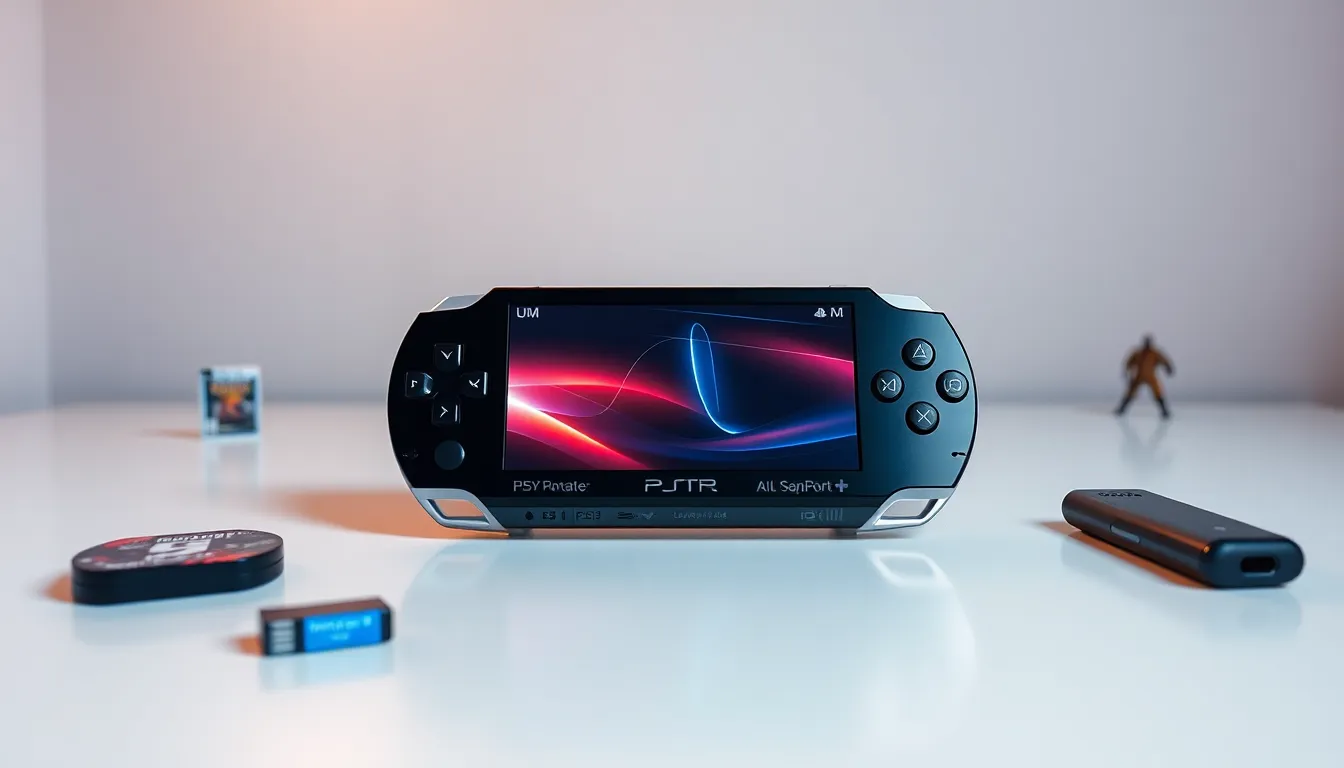
The PlayStation Portable examples that defined handheld gaming still resonate with players today. Sony launched the PSP in 2004, and it quickly became a powerhouse in portable entertainment. The device sold over 80 million units worldwide before its discontinuation in 2014. From blockbuster games to innovative hardware features, the PSP offered experiences that rivaled home consoles. This article explores the best PSP games, hardware variations, standout features, and the lasting influence this device has on modern portable gaming.
Table of Contents
ToggleKey Takeaways
- The PSP sold over 80 million units worldwide (2004–2014) and proved that console-quality gaming could succeed on portable hardware.
- PlayStation Portable examples of best-selling games include Grand Theft Auto: Liberty City Stories, Monster Hunter Freedom Unite, and God of War: Chains of Olympus.
- Sony released five PSP hardware variations, from the original PSP-1000 to the digital-only PSP Go, each addressing different user needs.
- The PSP pioneered features like Remote Play, multimedia playback, and Wi-Fi connectivity that influenced future PlayStation devices.
- Modern handhelds like the Nintendo Switch, Steam Deck, and PlayStation Vita all draw inspiration from PlayStation Portable examples of design and functionality.
- Emulators like PPSSPP keep classic PSP games accessible, ensuring the library remains playable on modern devices.
Best-Selling PSP Games Worth Revisiting
The PSP library featured hundreds of titles, but certain PlayStation Portable examples stand out as must-play experiences. These games pushed the hardware to its limits and attracted millions of players.
Grand Theft Auto: Liberty City Stories launched in 2005 and sold over 7.6 million copies. Players could explore a full open-world city on a handheld device for the first time. The game proved that console-quality experiences could work on portable hardware.
Monster Hunter Freedom Unite became a cultural phenomenon, especially in Japan. The game sold over 5 million units and introduced cooperative gameplay that kept players hunting for hundreds of hours. Its success directly influenced the Monster Hunter franchise’s evolution.
God of War: Chains of Olympus demonstrated that action games could thrive on the PSP. Critics praised its graphics and tight controls. The game earned a 91 Metacritic score and showed developers what the hardware could achieve.
Crisis Core: Final Fantasy VII gave fans a prequel story set in the beloved Final Fantasy VII universe. It sold over 3 million copies and featured an action RPG combat system that felt fresh yet familiar.
Other notable PlayStation Portable examples include:
- Tekken 6 – A full fighting game experience with extensive content
- Daxter – A platformer that earned praise for its humor and polish
- Lumines – A puzzle game that combined music and visuals perfectly
- Persona 3 Portable – An enhanced RPG port with new playable content
These titles represent the breadth of the PSP library. They ranged from action adventures to puzzle games, proving the device could handle any genre.
Notable PSP Hardware Variations
Sony released several PSP hardware models throughout the device’s lifespan. Each version offered improvements and changes that appealed to different users.
The PSP-1000 arrived first in 2004. It featured a 4.3-inch LCD screen and weighed 280 grams. This original model used UMD discs and included built-in speakers, Wi-Fi, and infrared capabilities.
The PSP-2000 (Slim & Lite) launched in 2007. Sony reduced the weight to 189 grams and added video output for TV play. The slimmer profile made it more comfortable for extended gaming sessions. Internal memory doubled, and load times improved.
The PSP-3000 debuted in 2008 with a better screen. Sony upgraded the display to show more vivid colors and improved visibility in bright environments. A built-in microphone allowed for voice chat in compatible games.
The PSP Go (N1000) represented the biggest design shift. Sony removed the UMD drive entirely and relied on digital downloads. The device featured a sliding screen design and weighed just 158 grams. It included 16GB of internal storage.
The PSP Street (E1000) arrived in 2011 as a budget option. Sony removed Wi-Fi and stereo speakers to reduce costs. This model targeted price-conscious buyers in select markets.
These PlayStation Portable examples of hardware evolution show how Sony responded to user feedback. Each revision addressed specific concerns while maintaining backward compatibility with existing games.
Innovative Features That Set the PSP Apart
The PSP introduced features that distinguished it from competitors. These innovations made it more than just a gaming device.
Multimedia Capabilities
The PSP functioned as a portable media player. Users could watch movies on UMD or play video files stored on Memory Stick. The device supported MP3, AAC, and WMA audio formats. Its screen quality made it popular for watching content during travel.
Internet Browser and Connectivity
Sony included a web browser that allowed internet access via Wi-Fi. Players could download game updates, access online multiplayer, and browse websites. The PlayStation Store offered digital games and demos.
Remote Play
Remote Play let PSP owners stream PS3 games and media to their handheld. This feature was ahead of its time. It laid the groundwork for similar functionality in later PlayStation products.
Ad-Hoc and Infrastructure Modes
The PSP supported two wireless modes. Ad-hoc allowed local multiplayer without internet access. Infrastructure mode connected players online for competitive and cooperative play. Games like Monster Hunter Freedom Unite built communities around these features.
Homebrew and Custom Firmware
A dedicated community developed custom firmware for the PSP. This allowed users to run emulators, homebrew games, and custom applications. While Sony didn’t officially support this, it extended the device’s usefulness for years.
These PlayStation Portable examples of innovation showed Sony’s ambition. The company wanted the PSP to compete with iPods and portable DVD players, not just Nintendo’s DS.
Legacy and Influence on Modern Portable Gaming
The PSP’s influence extends well beyond its production years. Modern portable gaming devices owe significant debts to Sony’s handheld.
The PlayStation Vita borrowed heavily from PSP concepts. Its dual analog sticks, remote play functionality, and multimedia features all evolved from PSP foundations. The Vita refined what the PSP started.
Nintendo’s Switch shares DNA with PlayStation Portable examples of design philosophy. The idea of console-quality games on portable hardware became standard because the PSP proved it possible. The Switch’s hybrid approach echoes the PSP’s ambitions.
Steam Deck and other PC handhelds follow the PSP’s template. High-fidelity graphics, full game libraries, and multimedia capabilities define these devices. They represent the logical endpoint of what Sony attempted in 2004.
Mobile gaming also absorbed PSP lessons. Touch controls replaced physical buttons on smartphones, but the appetite for deeper gaming experiences on portable devices never faded. Many classic PSP titles found new life on iOS and Android platforms.
Game preservation efforts keep PSP titles accessible. Emulators like PPSSPP allow players to experience PlayStation Portable examples on modern hardware. This ensures the library remains available for new generations.
The PSP proved that gamers wanted serious experiences on the go. That insight shapes every portable gaming device released today.

